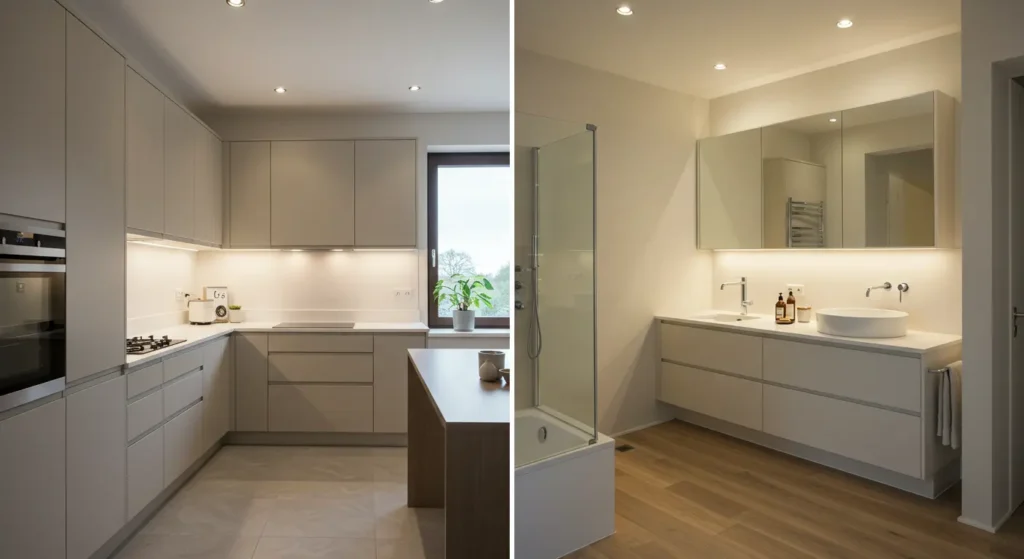

Good lighting can change how a kitchen or bathroom looks and feels. It can make a small room feel larger, improve safety, and simplify daily tasks. The right mix of fixtures also adds warmth without making the space too bright.
The best kitchen and bathroom lighting ideas for 2026 include layered lighting, under-cabinet lights, pendant fixtures, recessed lights, and smart lighting controls.
In bathrooms, backlit mirrors and well-placed vanity lights can improve face lighting, while shower-rated fixtures add safe light in wet areas. Natural light, dimmers, and energy-saving LED bulbs can also help create rooms that are useful during the day and relaxing at night.
Best Kitchen and Bathroom Lighting Ideas for 2026
1. Layered Lighting for Better Room Balance
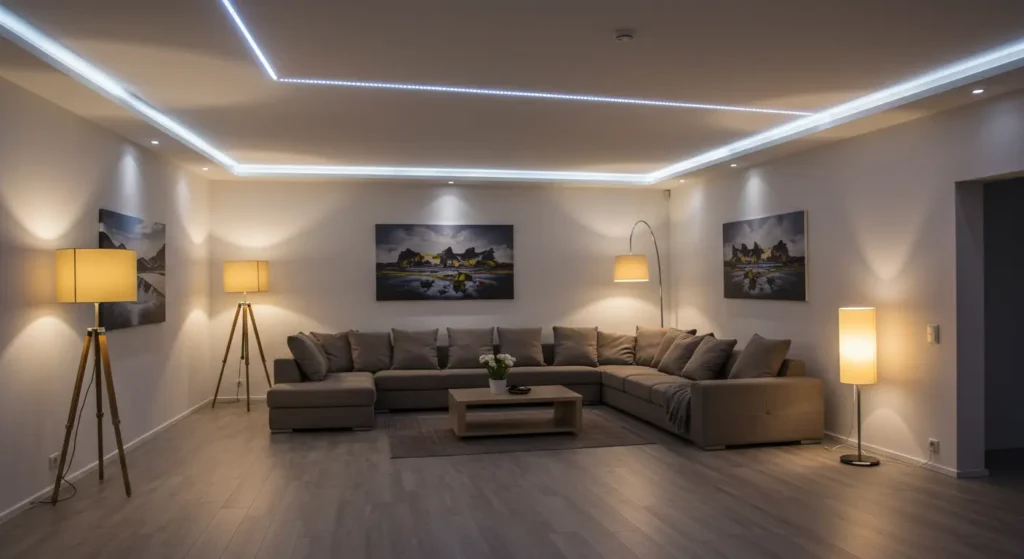
Layered lighting uses more than one type of light to cover different needs. It normally includes ambient, task, and accent lighting.
Ambient light provides general brightness, task lighting helps with activities such as food preparation or shaving, and accent lighting highlights cabinets, tiles, or other design details.
Using these layers prevents dark corners and harsh shadows. For Palo Alto homes, this approach works well in both large and compact rooms because each fixture has a clear purpose. A good lighting plan also gives you more control over brightness throughout the day.
2. Recessed LED Lights for Clean Ceiling Lighting
Recessed LED lights are set into the ceiling, which gives kitchens and bathrooms a clean appearance. They are useful when you want even general lighting without large fixtures taking up visual space.
LED technology uses less energy and produces less heat than older lighting types, making it one of the practical energy-efficient lighting options for homes. The spacing of recessed lights also matters because placing them too close together can create excessive brightness, while wide gaps can leave dark areas.
In kitchens, they can be placed around work zones. In bathrooms, moisture-rated recessed fixtures should be used in areas exposed to damp conditions.
3. Under-Cabinet Lighting for Kitchen Work Areas
Under-cabinet lighting is one of the most useful upgrades for a kitchen because it puts light directly on the countertop. It can reduce shadows created by upper cabinets and make tasks such as chopping, mixing, and reading labels easier.
LED strip lights and small puck lights are common choices. A color temperature around 3000K to 4000K can provide a balanced look without making the kitchen feel too cold.
The wiring should be planned before cabinets are installed. Good placement also helps keep the light source hidden while spreading light across the full work surface.
4. Pendant Lights Above a Kitchen Island
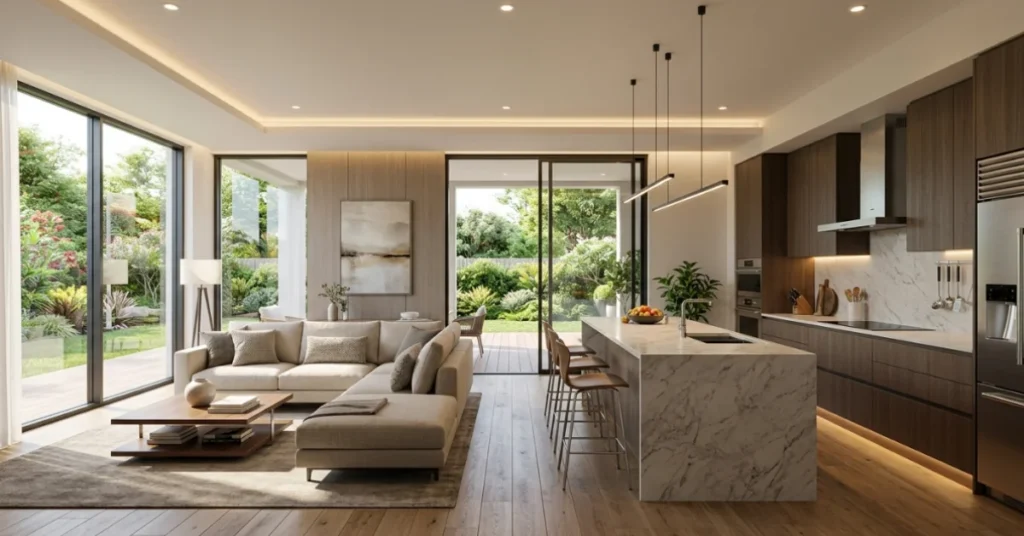
Pendant lights add both task lighting and visual interest above a kitchen island. They are especially useful when the island is used for cooking, eating, homework, or socializing. The size and number of pendants should match the island’s length and ceiling height.
Fixtures that hang too low can block views, while those placed too high may not provide enough task light. LED pendants with dimming control offer more flexibility.
For a modern Palo Alto kitchen, simple glass, metal, or soft-finish fixtures can add character without making the space feel crowded.
5. Vanity Lighting Around Bathroom Mirrors
Good vanity lighting is important because bathroom tasks often require clear views of the face. A light placed only above the mirror can create shadows under the eyes and chin. Side lights or vertical fixtures on both sides of the mirror can provide more even illumination.
A combination of side lighting and an overhead fixture can work well in larger bathrooms. Choose LED fixtures with a high Color Rendering Index, or CRI, so skin tones and colors appear more natural. Proper fixture placement also improves grooming, makeup application, and other daily tasks.
6. Backlit and Lighted Mirrors
Backlit mirrors are becoming a popular choice for modern bathrooms because they combine a mirror with built-in illumination. The light usually comes from LED strips behind the mirror, creating a soft glow around its edges.
Some models include dimming, touch controls, anti-fog features, and adjustable color temperature. These mirrors can provide useful face lighting while also creating a calm look. They work especially well in bathrooms with simple walls and clean finishes.
When choosing one, check the fixture’s electrical rating and installation requirements, especially if it will be placed close to a sink or other wet area.
7. Smart Lighting and Dimming Controls
Smart lighting gives homeowners more control over brightness, timing, and sometimes color temperature. Dimmers are useful even without a smart system because the same kitchen or bathroom may need different light levels at different times.
Bright light can help during meal preparation or morning routines, while lower light can create a softer setting in the evening. Smart switches may also allow lights to be controlled through a phone or voice assistant.
The electrical system and fixtures must be compatible with the selected dimmer. Proper installation helps prevent flickering and other performance issues.
8. Accent Lighting for Cabinets, Niches, and Details
Accent lighting can make a room feel more finished by drawing attention to selected design features. In kitchens, it can highlight glass-front cabinets, open shelving, backsplash materials, or architectural details.
In bathrooms, LED strips can be used inside wall niches, beneath floating vanities, or around selected features. The goal is not to make every surface bright. Instead, accent lights should create contrast and depth.
Low-profile LED strips are often useful because they can fit into small spaces. When combined with ambient and task lighting, accent fixtures can give the room a more balanced appearance.
Comparing Lighting Options for Kitchens and Bathrooms
Different fixtures serve different purposes, so selecting one type of light for the entire room is rarely the best approach. The table below shows where common options work best.
| Lighting Type | Best Use | Main Benefit |
| Recessed LED | General lighting | Clean and even ceiling light |
| Under-cabinet LED | Kitchen counters | Reduces work-surface shadows |
| Pendant lights | Kitchen islands | Task light with visual appeal |
| Vanity lights | Bathroom mirrors | Better face illumination |
| Backlit mirrors | Bathroom vanity areas | Soft light with a modern look |
| LED strips | Cabinets and niches | Flexible accent lighting |
| Smart fixtures | Both rooms | Easy brightness control |
| Dimmable lights | Both rooms | Adjustable light levels |
Key Considerations for Kitchen and Bathroom Lighting
Choose the Right Color Temperature
Color temperature affects how a room looks and feels. It is measured in Kelvin, or K. Warm white light around 2700K to 3000K creates a softer and more relaxed appearance. Neutral white around 3500K to 4000K gives a clearer look and works well for many kitchens and bathrooms.
Very cool light can feel harsh in residential spaces, so it should be selected carefully. The best choice also depends on the room’s finishes. White cabinets, natural wood, stone, tile, and paint colors can all look different under different color temperatures.
Pay Attention to Bathroom Safety
Bathroom lighting needs more than good design because water and electricity must be kept safely apart. Fixtures installed near showers, tubs, and other wet areas should have the correct moisture or wet-location rating for their position.
Electrical components should also be installed according to local code requirements. Ground-fault circuit interrupter, or GFCI, protection is an important part of bathroom electrical safety, although the exact setup depends on the electrical installation.
Planning fixture locations early can help avoid unsafe wiring and reduce the need for changes after tile, cabinets, or mirrors have been installed.
Plan Lighting With the Kitchen or Bathroom Layout
Lighting should be planned together with the room layout rather than added at the end. A kitchen island, sink, cooktop, refrigerator, vanity, shower, and storage areas all have different lighting needs.
Cabinets can also block ceiling light from reaching counters, which is why under-cabinet fixtures are useful. In a bathroom, the mirror and vanity should be considered before electrical points are placed.
Planning also helps avoid switches in inconvenient locations and keeps wires hidden. For remodeling projects in Palo Alto, lighting plans should match the room’s size, ceiling height, finishes, and daily use.
Make Natural Light Part of the Plan
Artificial lighting should work with natural daylight rather than compete with it. Windows, skylights, and glass doors can provide useful daytime illumination in kitchens and bathrooms.
However, daylight changes throughout the day and may not reach every part of the room equally. A kitchen may still need task lighting near counters, while a bathroom may need reliable vanity lighting in the morning or evening.
Also consider window coverings where privacy matters. Combining daylight with dimmable LED fixtures gives homeowners better control over brightness as outdoor light changes.
Final Thoughts
The best kitchen and bathroom lighting ideas for 2026 focus on comfort, safety, energy use, and easy control. Layered lighting, recessed LEDs, under-cabinet fixtures, pendant lights, vanity lighting, backlit mirrors, smart controls, and accent LEDs can each serve a different purpose.
Choosing the right color temperature and fixture rating also helps the finished space look better and work safely. Good lighting should match the layout instead of being treated as a final decoration.
If you are planning a kitchen or bathroom update, The Kitchen and Bath Company of Palo Alto can help you plan lighting alongside the rest of your remodeling project.