
Good lighting can make a modern home feel brighter, warmer, and more comfortable without using too much electricity. The right fixtures and controls can also reduce wasted energy and support a cleaner, more efficient home.
Energy-efficient lighting options for modern homes include high-efficiency LED bulbs and fixtures, which use much less power than incandescent bulbs. Smart lighting controls, occupancy sensors, and timers can turn lights off when they are not needed.
LED-compatible dimmers, solar outdoor lights, and layered lighting can further reduce energy use while improving comfort. High-efficacy recessed lights, linear LED systems, and integrated LED pendant fixtures also work well in modern Palo Alto homes.
Smart and Energy-Efficient Lighting Solutions for Your Home
1. High-Efficiency LED Bulbs and Fixtures
LED lighting is one of the simplest ways to reduce energy use in a home. LED bulbs can use up to 75% to 90% less energy than traditional incandescent bulbs and can last many times longer.
They also produce less heat, which can be helpful during warm weather. Homeowners can use LED bulbs in bedrooms, kitchens, bathrooms, hallways, and outdoor fixtures.
Integrated LED fixtures are another option because the light source is built into the fixture. When choosing LEDs, check lumens for brightness, watts for energy use, and color temperature for the look you want.
2. Smart Lighting Controls
Smart controls help prevent lights from staying on when nobody is using a room. Timers, schedules, occupancy sensors, and vacancy sensors can control lights based on how a space is used.
Some systems also allow homeowners to adjust lighting from a phone or central control panel. For example, outdoor lights can follow a set schedule instead of running all night. Indoor lights can turn off after a room becomes empty.
Smart controls can also work with dimming systems and daylight sensors. These features make it easier to manage electricity use without giving up comfort or convenience.
3. LED-Compatible Dimmer Switches
Dimmers give homeowners more control over how much light a room needs. Instead of running a fixture at full brightness all day, you can lower the output when less light is needed. This can reduce electricity use and create different moods for the same room.
Modern LED fixtures should be paired with dimmers designed for LED loads. Using an incompatible dimmer can cause flickering, buzzing, or poor performance.
Dimmers work especially well in living rooms, dining areas, bedrooms, and kitchens. They also allow one lighting system to support both bright task work and softer evening lighting.
4. Solar Outdoor Lighting
Solar lighting is a useful choice for pathways, gardens, patios, and other outdoor areas. These fixtures use small photovoltaic panels to collect sunlight during the day and store energy in a battery for nighttime use.
This means they can operate without drawing electricity from the home’s main power supply. Palo Alto receives plenty of sunlight during much of the year, making solar fixtures practical for many outdoor spaces.
They are available in pathway lights, wall fixtures, garden lights, and decorative options. Proper placement is important because shaded areas may not provide enough sunlight to fully charge the battery.
5. High-Efficacy Recessed LED Lighting
Recessed lighting provides a clean look that works well with modern kitchens, living rooms, and hallways. High-efficacy LED downlights can deliver strong illumination while using relatively little power.
Ultra-thin fixtures can also reduce the need for large ceiling openings, which may help limit air leakage around the fixture. Recessed trims can reduce glare by placing the light source deeper inside the housing.
For Palo Alto remodels, homeowners should also consider fixtures that meet California’s applicable high-efficacy lighting requirements. JA8-certified products can help meet required standards when the project calls for JA8-compliant lighting.
6. Linear LED and Low-Profile Track Lighting
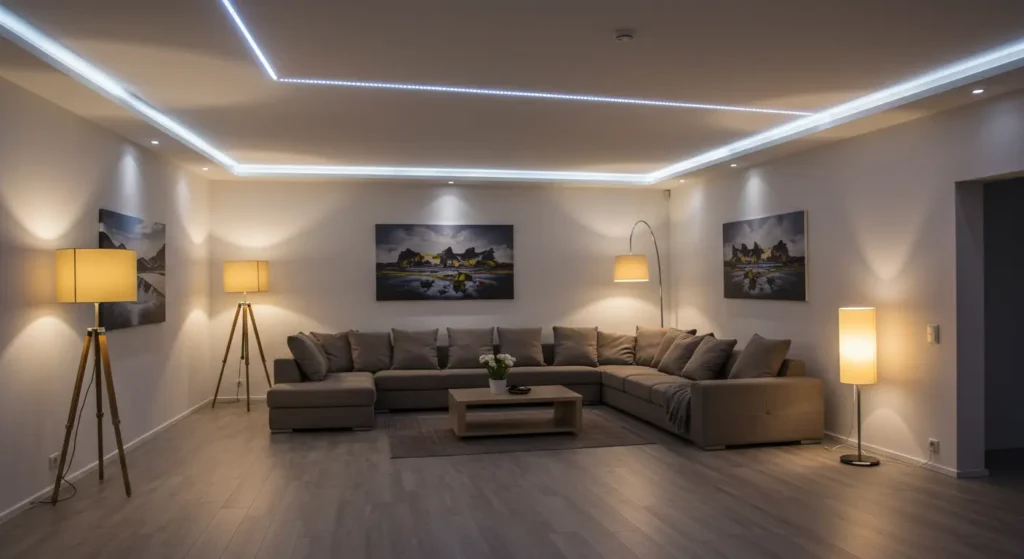
Linear LED systems are useful when you want to highlight architectural features without using large traditional fixtures. They can be installed under cabinets, along ceilings, inside coves, or near walls.
Magnetic track systems can provide flexible lighting because individual modules can be moved or changed as needs develop. LED tape can also be placed inside aluminum channels to create smooth lines of light.
Some high-density COB, or Chip on Board, LED strips provide a more continuous appearance with fewer visible light points. These systems work well for modern kitchens, high ceilings, shelving, and architectural details.
7. Integrated LED Pendant Lighting
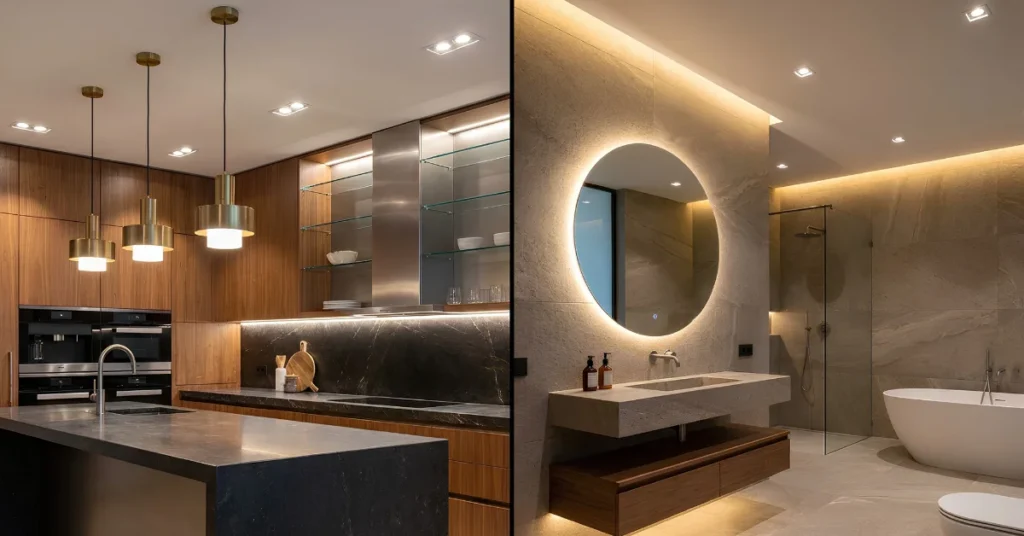
Pendant lights can provide focused illumination over kitchen islands, dining tables, and entry areas. Integrated LED pendants are designed with the light source and driver built into the fixture, allowing for slim and modern shapes.
Instead of lighting a large open room at the same brightness, a pendant can direct useful light toward a specific surface. This approach can reduce the need for extra fixtures.
Diffusers made from frosted acrylic or similar materials can spread light more evenly and reduce harsh glare. For modern interiors, these fixtures can combine decorative design with efficient directional lighting.
8. Layered Lighting for Better Energy Use
Layered lighting combines different types of light instead of depending on one large source. Ambient lighting provides general room illumination, task lighting focuses on areas such as kitchen counters or desks, and accent lighting highlights artwork, shelves, or architectural features.
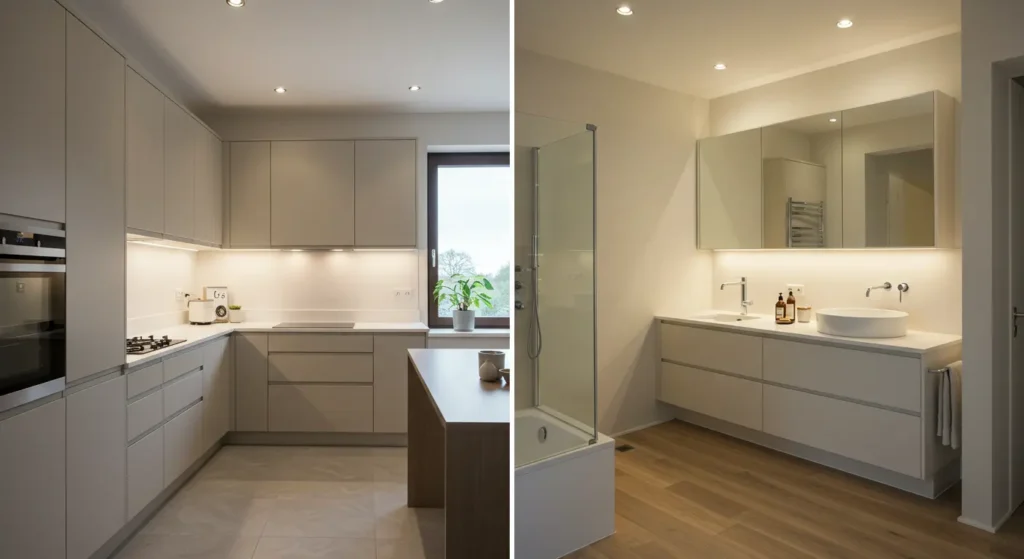
This approach can reduce the need to keep every fixture at full brightness. A kitchen, for example, may use recessed LEDs for general light, under-cabinet LEDs for food preparation, and a pendant over the island. Each layer serves a purpose. With dimmers and smart controls, homeowners can use only the lighting they need at a particular time.
9. Choose the Right Color Temperature
Color temperature affects how a room looks and feels, but it can also influence how much lighting is needed. It is measured in Kelvin, written as K. Warm white lighting around 2700K to 3000K works well in bedrooms, living rooms, and dining areas because it creates a softer feel.
Cooler light around 4000K to 6500K can be useful for work areas where clear visibility is important. Some modern LED fixtures offer warm-dimming technology.
These fixtures can shift from brighter white light toward warmer tones as they are dimmed, giving homeowners more flexibility throughout the day.
10. Follow California Title 24 and JA8 Requirements
Energy-efficient lighting is not only about choosing low-wattage bulbs. California homes must also follow energy standards that can affect lighting design during remodels and new construction.
Title 24 includes requirements for high-efficacy lighting and lighting controls. JA8 certification is important for certain residential lighting products because it identifies fixtures and lamps that meet California’s high-efficacy requirements.
Homeowners should check the exact requirements that apply to their project before purchasing fixtures. Working with the right professionals can also help avoid problems during inspection and make sure the lighting system is planned correctly.
Compare Energy-Efficient Lighting Options
| Lighting option | Main benefit | Best use |
| LED bulbs | Low energy use and long life | Whole home |
| Smart controls | Automatic energy management | Indoor and outdoor areas |
| LED dimmers | Adjustable brightness | Living rooms and bedrooms |
| Solar lighting | Uses stored solar energy | Paths and gardens |
| Recessed LEDs | Clean look and efficient output | Kitchens and living rooms |
| Linear LEDs | Flexible architectural lighting | Cabinets and ceilings |
| Integrated LED pendants | Focused task lighting | Islands and dining areas |
| Layered lighting | Uses light only where needed | Open-plan rooms |
| Warm-dimming LEDs | Flexible light levels and color | Living spaces |
Plan Lighting Around How Each Room Is Used
Good lighting design starts with the purpose of each space. In the kitchen, a functional kitchen layout should include clear task lighting for counters, sinks, and cooking areas, while a bedroom may need softer light for relaxing.
Hallways need enough brightness for safe movement but do not always require powerful fixtures. Outdoor areas may need lighting for paths, entrances, and security. Planning each layer before installation can prevent over-lighting.
It can also reduce the number of fixtures needed. Combining efficient LEDs with dimmers, sensors, and smart schedules gives homeowners better control over when and where electricity is being used.
Make Energy Efficiency Part of Your Palo Alto Remodel
A modern lighting plan should balance energy use, comfort, appearance, and California’s building requirements. LED fixtures provide the foundation, while smart controls, dimmers, solar outdoor lights, recessed systems, linear LEDs, and integrated fixtures add more ways to improve efficiency.
Choosing the right color temperature and using layered lighting can also make rooms more useful without filling the ceiling with fixtures. For Palo Alto homeowners, checking Title 24 and JA8 requirements early is especially important.
Proper planning can help create a clean lighting design that looks modern while keeping unnecessary energy use under control.
Conclusion
Energy-efficient lighting options for modern homes can lower power use while making each room easier and more comfortable to use. LEDs, smart controls, dimmers, solar fixtures, recessed lights, linear systems, integrated pendants, and layered lighting all offer useful ways to improve a home’s lighting plan.
Choosing the right color temperature and checking Title 24 and JA8 requirements can make the system more practical and compliant.
If you are planning a kitchen or bathroom remodel in Palo Alto, consider lighting as part of the design from the start. Contact The Kitchen and Bath Company of Palo Alto to discuss your remodeling needs and create a modern, efficient space that fits your home.