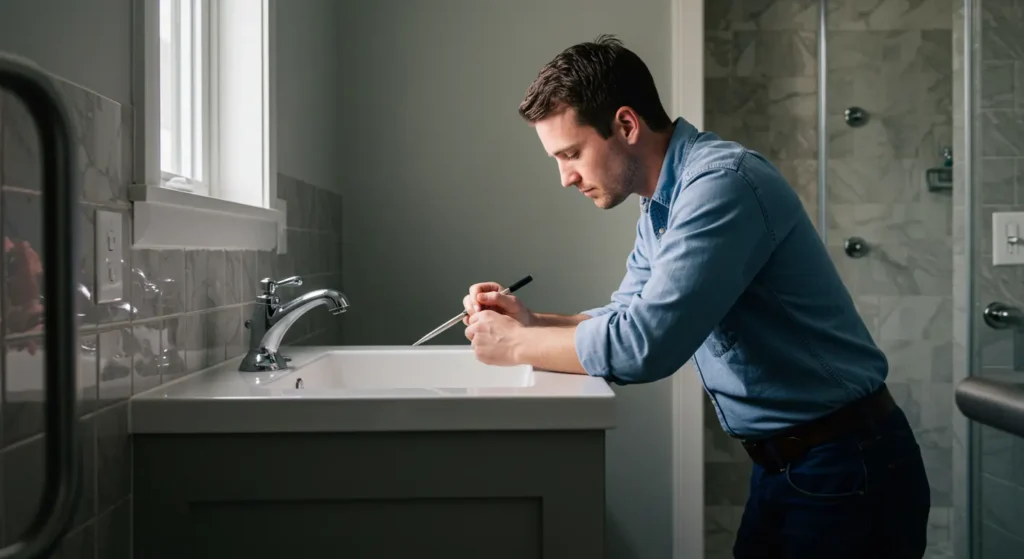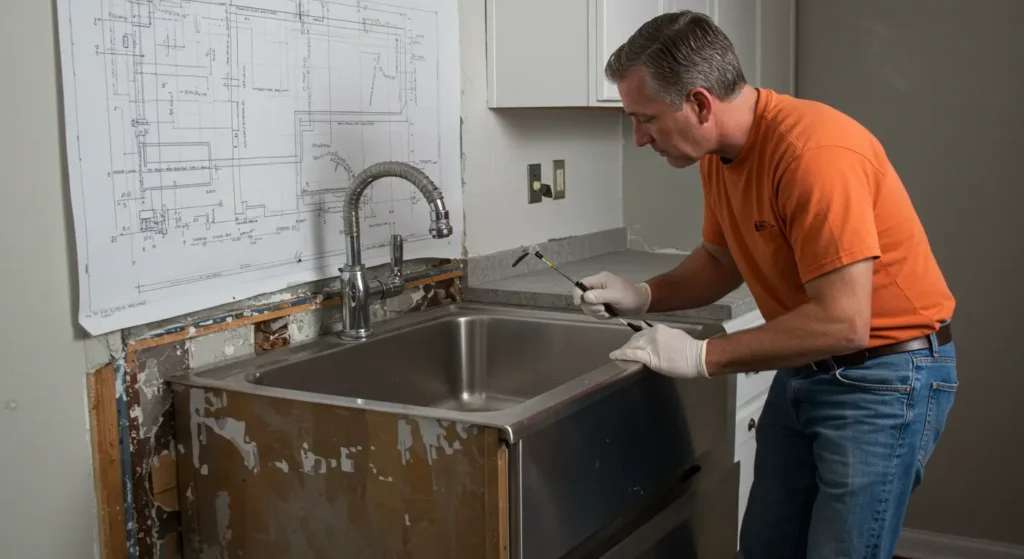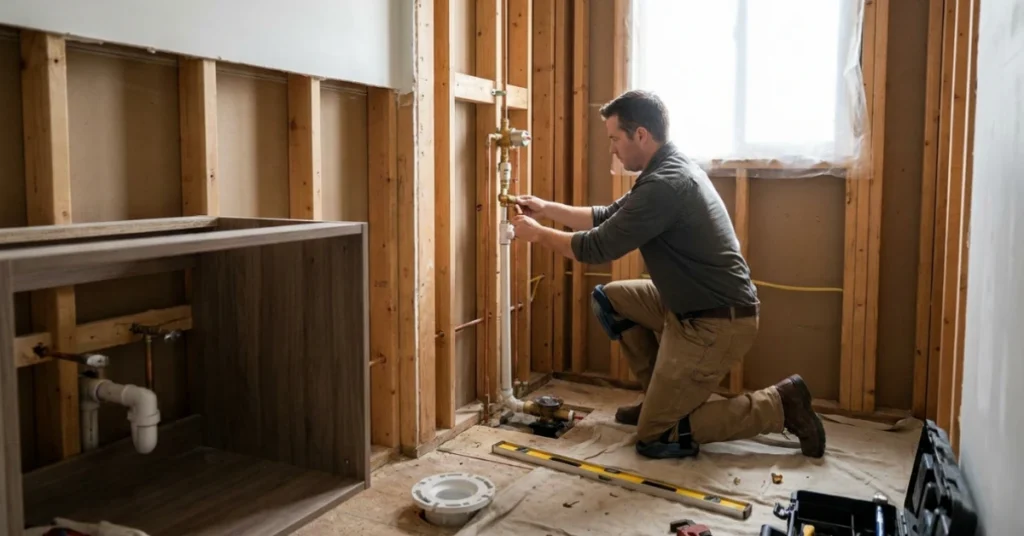

A remodel is a good time to improve more than the look of your kitchen or bathroom. Once the walls and floors are open, you have a chance to replace old plumbing, improve water efficiency, and add features that make daily use easier.
Some of the best plumbing upgrades include a tankless water heater, modern PEX or copper pipes, low-flow fixtures, touchless faucets, water filtration, and smart leak detection.
You can also remodel kitchen and bathroom plumbing with thermostatic shower controls and other modern features. Planning these upgrades during the remodel can reduce future repair work, improve efficiency, and help your home meet local water-saving requirements.
Thoughtful Plumbing Upgrades to Consider in Your Remodel
1. Replace Old Pipes Before They Become a Problem
Old plumbing pipes can cause problems that are difficult to see until water damage appears. Galvanized steel pipes may develop internal corrosion that restricts water flow, while aging connections can become weak and start leaking behind walls.
A remodel gives you access to areas that would otherwise be covered by drywall, cabinets, or flooring. This makes it a practical time to replace worn supply lines with modern materials such as PEX or copper.
New pipes can improve water pressure, reduce leak risks, and give the plumbing system a longer service life.
2. Upgrade to a Tankless Water Heater
A tankless water heater can be a useful upgrade when an older storage water heater is taking up valuable space. Instead of keeping a large tank full of heated water, a tankless unit heats water as it moves through the system.
This reduces standby heat loss and can improve energy efficiency. Wall-mounted installation also frees up floor space, which can be useful in smaller homes or remodeled utility areas.
Proper sizing is important because the unit must provide enough flow for the home’s peak hot water demand. Installation should also meet local gas, electrical, venting, and plumbing requirements.
3. Install Water-Efficient Toilets
Toilets account for a large share of indoor household water use, making them an important target during a bathroom remodel. Modern high-efficiency toilets use less water per flush than many older models while still providing effective waste removal.
Dual-flush designs offer different flush volumes based on the type of waste being removed. Some premium models also include features such as heated seats, automatic lids, self-cleaning functions, and other comfort controls.
Choosing a certified water-efficient model can help reduce water use over time. The toilet should also be selected based on the bathroom’s available space and existing drain layout.
4. Choose Touchless or Smart Faucets
A faucet is used many times each day, so even a small improvement can make a noticeable difference. Touchless and motion-activated faucets allow users to turn water on without touching the handle.
This can be helpful when preparing food or when your hands are dirty. Automatic shut-off can also prevent water from running longer than necessary. Modern faucets are available in many styles, making it easier to match them with new cabinets, counters, and bathroom finishes.
During installation, check the water pressure and connection requirements to ensure the selected fixture works correctly with the home’s plumbing system.
5. Add a Whole-Home Water Filtration System
A remodel can be a good opportunity to install a permanent water filtration system instead of relying on individual pitcher filters. A whole-home system can treat water as it enters the property, allowing filtered water to reach multiple fixtures.
Depending on the system, filtration can target sediment, chlorine, odors, and other unwanted substances. A separate under-sink filtration system can also provide treated drinking water without filtering every gallon used for bathing or cleaning.
Before choosing a system, test the home’s water and identify the specific contaminants or quality concerns that need to be addressed.
6. Install Smart Leak Detection
A small leak can cause serious damage when it remains hidden behind a wall or under a cabinet. Smart leak detectors provide an added layer of protection by monitoring moisture, water flow, or changes in pressure.
Some systems can send an alert to your phone when unusual activity is detected. More advanced mainline devices can automatically close the home’s water supply when they identify a possible major leak.
Installing these systems during a remodel can make it easier to position sensors near sinks, water heaters, washing machines, and other risk areas. They can provide useful protection even when nobody is home.
7. Add a Water Flow Monitor
A water flow monitor provides a clearer picture of how much water your household uses. The system can track water movement through the main line and help identify unusual patterns. For example, continuous flow when everyone is asleep may indicate a hidden leak.
A sudden increase in daily consumption may also point to a running toilet, damaged supply line, or another plumbing problem. These devices can help homeowners understand their water habits and find ways to reduce waste.
When paired with a smart shut-off valve, a flow monitor can become part of a larger home water management system.
8. Improve Kitchen Plumbing With Better Planning
Kitchen remodeling provides an opportunity to improve the plumbing behind the cabinets as well as the visible fixtures. Consider replacing old supply lines, adding accessible shut-off valves, and checking the drain connection before new cabinets are installed.
If you are adding a dishwasher, water filter, ice maker, or pot filler, plan each connection before the walls are closed. A larger sink may also require a different drain arrangement. Keeping plumbing connections organized and accessible can make future repairs easier.
It is also important to avoid overcrowding the cabinet area with filters, valves, garbage disposal equipment, and other components.
9. Upgrade Bathroom Shower Controls
Modern shower systems can improve comfort while giving homeowners better control over water temperature. Thermostatic valves can help maintain a steady temperature by adjusting the hot and cold water mix as conditions change.
This can reduce sudden temperature changes when another fixture is turned on. Remodels can also include handheld showerheads, rain showerheads, body sprays, and other features.
However, adding several outlets increases water demand, so the home’s supply capacity and pipe sizing should be reviewed first. The plumbing design should also account for proper drainage so the shower can handle the expected flow.
10. Consider a Spa-Style Bathroom Upgrade
A bathroom remodel can include plumbing features designed to create a more relaxing space. Steam showers, body sprays, handheld shower systems, and smart shower controls can add a higher level of comfort.
These features require more planning than a standard shower because water supply, drainage, electrical connections, and equipment locations must work together. A steam shower, for example, needs a properly sized steam generator and suitable enclosure.
Before adding multiple high-flow fixtures, check the home’s water pressure and hot water capacity. Planning these details during the rough-in stage is much easier than adding them after the bathroom is finished.
11. Prepare Plumbing for Future Technology
A good remodel should consider how the home may be used several years from now. Leave suitable access for service valves and important plumbing equipment instead of hiding everything permanently behind finished surfaces.
If you are replacing a water heater, discuss future energy options and available electrical capacity with a qualified professional. Local requirements can also affect how new equipment is installed.
Palo Alto homeowners should check current city requirements and applicable CALGreen rules because water efficiency and building standards can affect fixture and plumbing choices. Planning for future upgrades can reduce the need to open walls again.
12. Upgrade Hidden Plumbing Infrastructure
The most valuable plumbing improvements are not always the ones you can see. Replacing damaged drain lines, improving vent connections, adding new shut-off valves, and correcting poorly supported pipes can protect the entire system.
Drain-waste-vent plumbing needs to work as one system so wastewater can move properly and sewer gases remain outside the living space. During a remodel, inspect P-traps, cleanouts, drain connections, and vent routes while they are accessible.
Fixing these hidden issues before new finishes are installed can prevent future demolition and repair costs. Good infrastructure also supports the performance of new fixtures.
13. Make Water Efficiency Part of the Remodel
Water efficiency should be considered across the entire plumbing system rather than through one fixture alone. Low-flow toilets, efficient faucets, water-saving showerheads, and smart controls can reduce unnecessary water use without making the home less comfortable.
Proper pipe sizing and pressure also matter because an efficient fixture cannot solve problems caused by poor plumbing design. Palo Alto homeowners should review current local requirements before purchasing fixtures or equipment.
Products that meet applicable efficiency standards can help the remodel satisfy code requirements while also reducing long-term water use. The best upgrades balance performance, comfort, maintenance, and efficiency.
14. Test New Plumbing Before Finishing the Remodel
New plumbing should be checked before drywall, cabinets, tile, and flooring cover the work. Supply lines should be pressure tested, while drains should be checked for leaks and proper flow. Inspect all fittings, valves, traps, and connections carefully.
If a new water heater, filtration system, or smart shut-off device has been installed, test its controls as well. This stage is much easier for finding problems because every connection is still accessible.
Completing required inspections before closing the walls can also help confirm that the installation follows local requirements and that the finished remodel will not hide preventable plumbing issues.
Conclusion
The best plumbing upgrades can improve comfort, water efficiency, reliability, and protection throughout your home. Replacing old pipes, installing a tankless water heater, choosing efficient toilets and faucets, adding filtration, and using smart leak monitoring can make a remodel more useful for years to come.
Bathroom upgrades such as thermostatic shower controls can add comfort, while better kitchen plumbing can improve everyday convenience. Hidden infrastructure should receive just as much attention as visible fixtures.
If you are planning a remodeling project in Palo Alto, The Kitchen and Bath Company of Palo Alto can help you plan practical plumbing improvements that fit your space, needs, and overall remodel.